The Revd Dr Earl Collins, Canon Chancellor of Chichester Cathedral, celebrates the legacy of former Bishop of Chichester Lancelot Andrewes. From his contribution to the King James Bible to his profound life of prayer.
This former Bishop of Chichester (Ely and Winchester) is hardly a household name and unlikely to become one! But in his day, he was one of the most celebrated bishops in the Church of England and abroad, renowned for his learning and deep spiritual life, both of which found expression in a series of sermons given during his long and active ministry. A model of magnificent English and an influence on the poet T.S. Eliot, many were preached in the presence of King James I.
Andrewes also played a leading part in the famous translation of the Bible (subsequently called the ‘King James’ or ‘Authorised Version’), which became the standard English-language Bible and served as the basis for many modern translations.
His commemoration is kept by the Church of England on the 25th of September. This year we celebrate on that day the four-hundredth anniversary of his death. A specially composed anthem, by the Revd. Dr, Paul Nash, a vicar in this diocese, will be sung at Evensong in Chichester Cathedral that day. On the 15th of October it will again be sung at Evensong as a prelude to a public lecture given by Dr. Peter McCullough, Professor of English at Lincoln College, Oxford and a leading expert on Andrewes and the Jacobean Church (the Church in the time of King James I).
What might we learn today from this outstanding figure of the Anglican Church? How might he serve as a role model for Christian teachers and clergy, not only, but including bishops?
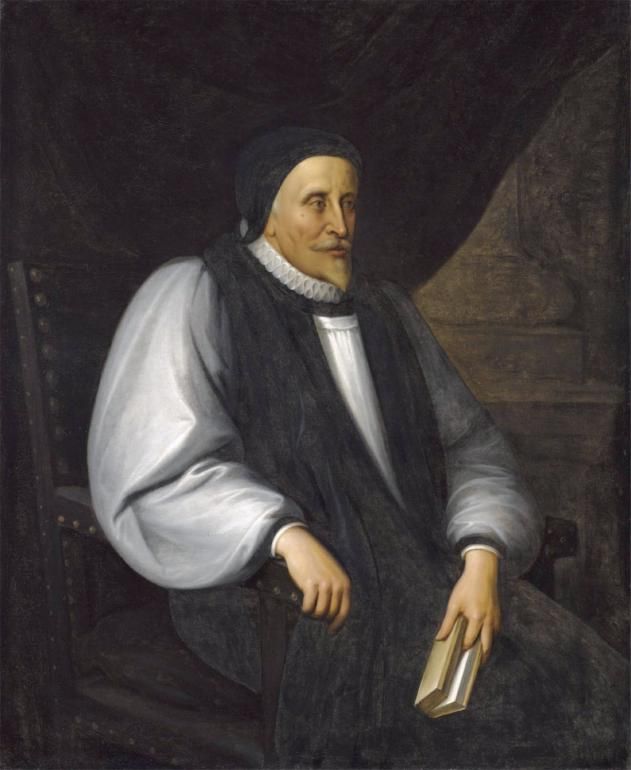
First, Andrewes was a lover of the Holy Scriptures through which he encountered God. Immersion in the Bible – read critically and intelligently but with love and devotion – is fundamental to being a Christian.
Second, Andrewes was man of immense learning, proficient in ancient and modern languages and familiar with the writings of the Early Church figures known as the Fathers. Few of us could aspire to that degree of learning but he is a reminder to anyone charged with teaching and communicating the Christian faith, whether clerical or lay, to use our God-given intelligence to reflect on what faith means, drawing on the treasures of the Church’s past tradition to explain it for our present era.
Third, Andrewes was a man of God, whose life was steeped in prayer. One of his most famous and lasting gifts to the Church was a collection of private prayers he compiled for his own daily use. They are wide-ranging and generous, covering every area of life. They reflect the passion, intensity and diligence with which this Jacobean bishop carried out the work of a priest in praying for others. His prayers exemplify how a later, equally celebrated Anglican, Archbishop Michael Ramsey, once described prayer: ‘To be with God with the people on our heart.’
For those reasons - the love of Holy Scripture, godly learning and a profound life of prayer - the Church of England celebrates Bishop Andrewes and holds him up as a shining example of the service of God and his people.
Want to delve deeper into the remarkable life of Lancelot Andrewes?
Exploring the life, work and legacy of Lancelot Andrewes takes place at Vicars' Hall on Thursday 15 October 2026. Presented by Professor Peter McCullough of Lincoln College, Oxford, this special lecture will examine the lasting influence of the former Bishop of Chichester on theology, preaching, liturgy and the Church's spiritual tradition.
The evening begins with Choral Evensong at 5.30pm in Chichester Cathedral, featuring prayers derived from Andrewes' writings and a newly commissioned anthem inspired by his Preces Privatae (Private Prayers), composed by the Revd Dr Paul Nash. The lecture follows in Vicars' Hall at 7.00pm.