Chichester Cathedral is delighted to share a new video recording of Hubert Parry’s Jerusalem, performed by the Cathedral Choir.
The hymn is deeply rooted in Sussex, making this anniversary performance especially significant as we approach the final stage of the Chichester950 Match Funding for Music campaign to help secure the Cathedral’s future for generations to come. To date, the appeal has raised £911,000, with all donations being doubled until March 2026 or until the full £950,000 has been claimed.
The Dean of Chichester, the Very Revd Dr Edward Dowler, said:
“Jerusalem has a unique resonance here in Sussex, where both Blake and Parry lived and worked. To hear it sung by our Cathedral Choir, in the heart of the Diocese, is deeply moving. We hope this new recording will inspire people to support the Chichester 950 appeal as we approach the final stage.”
To coincide with its release former Chichester Cathedral Organ Scholar Kyoko Canaway reflects on the remarkable Sussex story behind one of England’s best-loved hymns.
Jerusalem: A Sussex Musical Triumph
by Kyoko Canaway
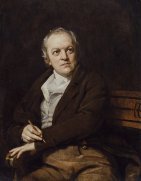
Sussex has long inspired generations of artists, musicians and writers. As we mark the 110th anniversary of Hubert Parry’s setting of William Blake’s Jerusalem, it is worth pausing to consider how this text – from poem to hymn to anthem – is bound to our county.
William Blake moved to Felpham, near Bognor Regis, in 1800 to escape what he called a “deep pit of Melancholy” in London. Felpham, the “sweetest spot on Earth”, gave him space to write freely. It was here that he began the preface to his epic poem Milton, where the verses of Jerusalem first appeared. Blake’s words asked whether a perfect England – a “green and pleasant land” – could be created, free from oppression and open to imagination.
The poem’s opening questions – “Did those feet in ancient times walk upon England’s mountains green?” – drew on a myth that Joseph of Arimathea, and perhaps even the young Jesus, had travelled to England. Whether or not Blake took this legend literally, he used it to frame a larger question: had England ever truly embodied a vision of peace, love and divine justice? His answer was no – and so he called for a new “mental fight”, summoning fellow artists to help “build Jerusalem in England’s green and pleasant land”.
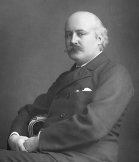
c. 1890s
Over a century later, during the First World War, poet laureate Robert Bridges revived Blake’s text for his anthology The Spirit of Man. In 1916 he asked Hubert Parry, then living in Rustington, West Sussex, to set it to music for a gathering of Fight for Right, an organisation boosting morale at home and at the front. Parry’s majestic tune transformed Blake’s call to artistic struggle into a national song of hope and unity. Its wide range, bold chords and rousing refrain carried Blake’s words far beyond their original meaning, giving England an anthem that spoke to the resilience of its people.
The hymn’s power only grew. In 1922 Edward Elgar reorchestrated Parry’s setting for the Leeds Festival, expanding its grandeur with full orchestral forces. This is the version we know today – one so beloved that King George V is said to have preferred it to “God Save the King”. From cathedrals to village greens, and from cricket pitches to the Last Night of the Proms, Jerusalem has become a symbol of national pride and identity.
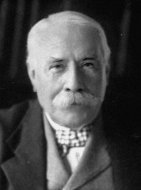
c. 1931
It is striking how often Sussex is at the centre of this story. Blake found inspiration in Felpham; Parry composed the music in Rustington and had family ties to Shulbrede Priory near Haslemere, where his manuscript of Jerusalem was still on the piano until recently; and Elgar spent time in Fittleworth near Pulborough during the 1920s. The landscapes and communities of West Sussex gave rise to one of England’s most stirring hymns – a true Sussex musical triumph.
Now, with this new recording by Chichester Cathedral Choir, Jerusalem is heard afresh in the very heart of the Diocese of Chichester, which stretches across East and West Sussex. It stands as both a celebration of our heritage and a call to support the Cathedral’s future through the Chichester 950 campaign.

Kyoko Canaway was organ scholar at Chichester Cathedral (2017-2018). After this, she went to Gonville and Caius College, Cambridge, where she studied French and German alongside an organ scholarship. After her studies, she was Assistant Organist at Gonville and Caius for one year, before beginning a law conversion course. Kyoko is now a trainee solicitor, but still enjoys music in her free time.
Donate Now
Although the Match Funding Appeal ended at the end of March 2026, you can still make a donation to support music at the Cathedral.
To make a single gift donation via cheque, bank transfer or card payment, please download and complete this Giving Form CCPETM.docx or call us on 01243 812991 (Monday - Friday, 9am - 2pm) to make a credit card donation.
To make a regular donation for music please complete this secure online form and press Submit at the end. Your completed form will be sent securely to our office, where we will process your regular donation with our bank.
By completing this form, you agree to giving a regular donation to the Chichester Cathedral Restoration and Development Trust (Charity No. 1156729), restricted to the Chichester Cathedral Platinum Endowment Trust for Music.
Chichester Cathedral Restoration & Development Trust CIO
Registered Charity No. 1156729