Ghost stories before Midnight Mass, Christmas stockings made from school socks and a schedule of services that left little time for festivities: Christmas at Chichester Cathedral looked rather different for choristers 50 years ago.
A look back at Christmas 1976 by Ellen Cheshire, in conversation with former Chichester Cathedral chorister Andrew Wicks
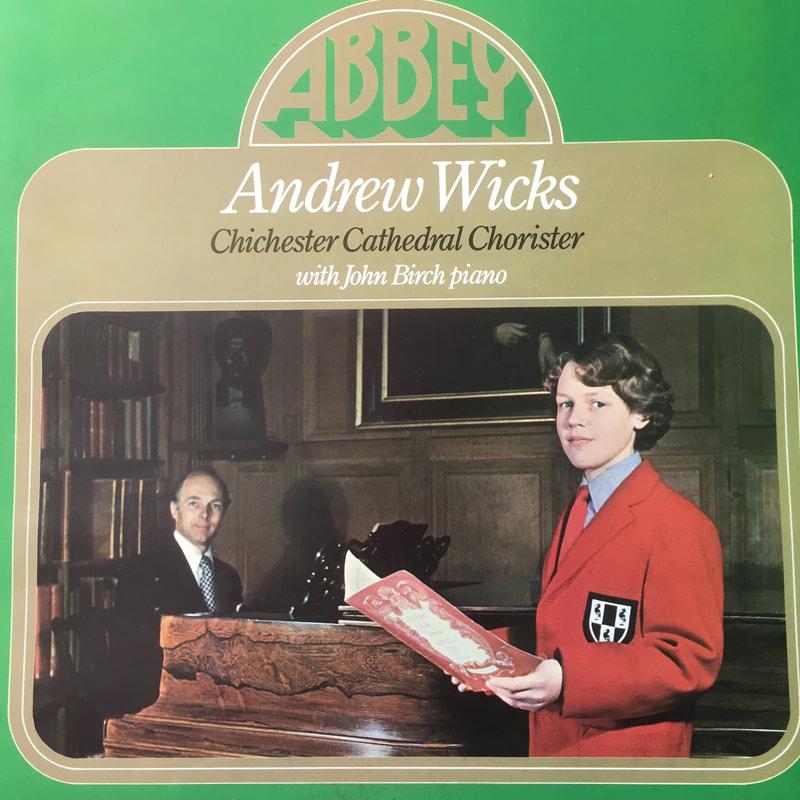
For Andrew Wicks, Christmas 1976 marked the end of five formative years as a Chichester Cathedral chorister. He had joined as an eight-year-old probationer, unable to read music and initially learning everything by ear. By the time he left, he was Head Chorister, had given solo recitals in the Cathedral, performed with leading professional musicians and made two solo LPs.
It was the beginning of a lifetime in music.
I went on to have a career singing, which would never have happened were it not for my chorister training.
Andrew
A chorister’s Christmas
Andrew had formally finished school in the summer of 1976, but remained for one additional term to sing with the Cathedral Choir.
His memories of that final Christmas include a busy round of services, with Midnight Mass on Christmas Eve followed by services on Christmas Day and a carol service on Boxing Day.
There were, however, moments of mischief among the music, Andrew remembers...
The headmaster used to read us ghost stories on Christmas Eve when we were supposed to sleep before the Midnight Mass.
“And, the headmaster’s wife would organise ‘stockings’ in the form of school socks which were swapped for filled ones by the morning. We were always awake when this happened and used to make the task of swapping the stockings impossible by tying them to the bed or pretending to sleep on them.”
Christmas Day brought old-fashioned party games in the headmaster’s sitting room and Christmas dinner, before the choristers returned to their duties.
It was the culmination of an unusually busy year. The Choir had travelled to Paris and Chartres, sung broadcast Evensongs and performed in concerts. Andrew’s own musical life was developing rapidly too, with solo recitals in the Cathedral in May and October and performances with the Academy of St Martin in the Fields and the BBC.
From probationer to professional musician
Looking back, Andrew is struck by how much changed during his five years as a chorister.
It is hard to believe what I achieved in five short years, from a frightened probationer, unable to read music and mystified by Anglican Chant to a capable, disciplined professional musician.
Life as a chorister was demanding. There were two rehearsals a day, Evensong, three services on Sundays and daily practice on two instruments. Wednesday was the choristers’ only day off. But alongside the hard work came an extraordinary musical education.
Initially learning the music by ear, Andrew gradually learnt to sight-sing, a skill that would prove invaluable throughout his professional career.
One musician in particular had a lasting influence: Ian Fox, then Assistant Organist and Head of Music at the school.
“My piano lessons were taken up with singing and song learning, listening to the Goons, writing musical arrangements and recording. He encouraged my trumpet playing too and his belief in me was a huge boost.”
Making records at Glyndebourne
Andrew’s talent also led to opportunities beyond the Cathedral.
Through John Birch, then Organist at Chichester Cathedral, Andrew was introduced to pianist and broadcaster Joseph Cooper, known to television audiences through the BBC’s Face the Music.
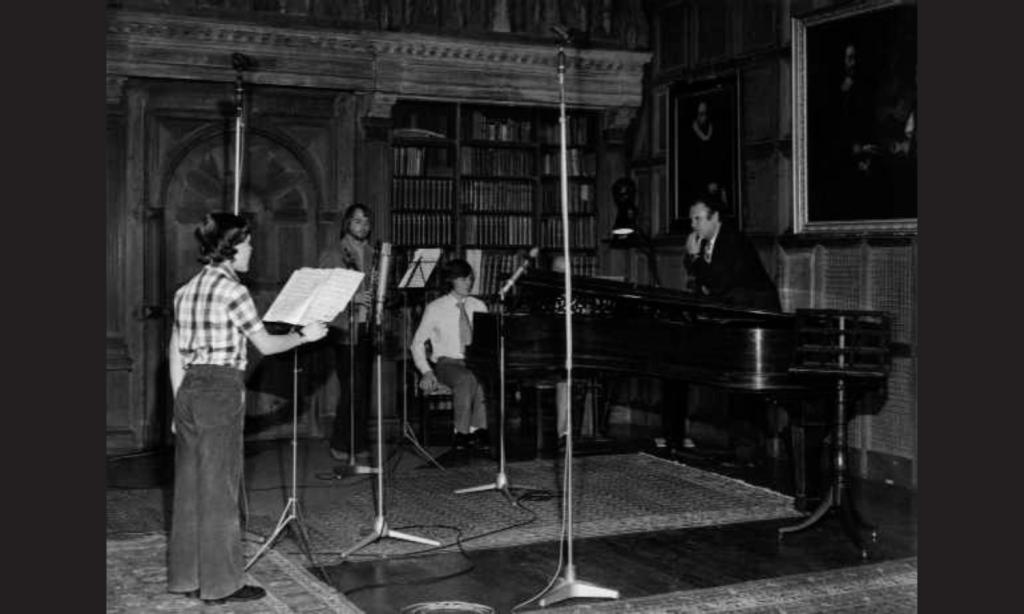
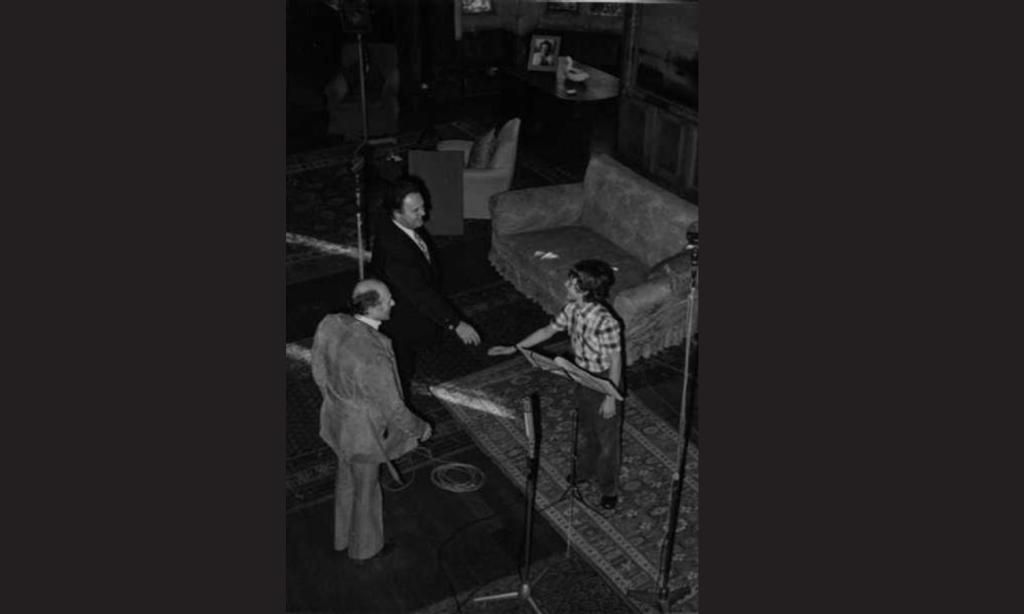
Cooper suggested making a recording of Schubert’s The Shepherd on the Rock with a boy treble. In January 1977, Andrew recorded it, along with other classical songs, in the Organ Room at Glyndebourne.
It became his second album for the Abbey label, following an earlier recording arising from his 1976 Cathedral recitals. He also appeared on a Christmas carol recording with the Cathedral Choir.
Andrew remembers the recording process itself, long before digital editing made the job simpler. Ian Fox assisted engineer Harry Mudd, with editing involving the painstaking business of physically cutting and splicing the master tape with a razor blade.
A life shaped by singing
After Chichester, Andrew attended Eastbourne College before studying music at Durham University and singing in Durham Cathedral Choir.
Teacher training was supposed to follow. Instead, he decided to see where singing might take him.
He studied performance and singing for four years at the Royal Northern College of Music and began his professional career in the Glyndebourne Chorus. Roles and understudy work followed with companies including English National Opera, the Royal Opera House, Welsh National Opera, Scottish Opera and Grange Park Opera.
Andrew also worked as a session and concert singer with ensembles including the BBC Singers, Monteverdi Choir and Gabrieli Consort. Music took him around the world, with performances and tours reaching Australia, Mexico, Russia, Korea and China.
The foundations of that career, he believes, were laid during those five childhood years in Chichester.
Preserving a living tradition
For Andrew, the value of being a chorister extends beyond learning to sing.
“Besides the musical and vocal training that choristers receive, which is second to none, there is the spiritual awareness that is awakened by sharing beautiful spaces, worship and music together.
“There is something magical about being able to wander into a cathedral or college and hear a ritual that has been going on for hundreds of years, largely unchanged.”
Half a century after his final Christmas as a Chichester chorister, Andrew remains proud to have been part of that tradition and passionate about ensuring that future generations have the same opportunity.
I feel proud to have been involved in this tradition and am sure the singers of the future will continue to be nurtured and inspired by the system.
Help give the gift of music to future generations
Today, Chichester Cathedral continues to offer young people the opportunity to receive an exceptional musical education as part of its centuries-old choral tradition.
You can help ensure that opportunity continues.
By sponsoring a chorister, you can directly support a young person’s choristership and the musical education, experiences and opportunities that come with it.
You can also support the Chichester Cathedral Platinum Endowment Trust for Music, helping to build a permanent endowment to safeguard the Cathedral’s musical tradition for generations to come.
Support our music endowment appeal